Optimize the shape by descending through the surrogate
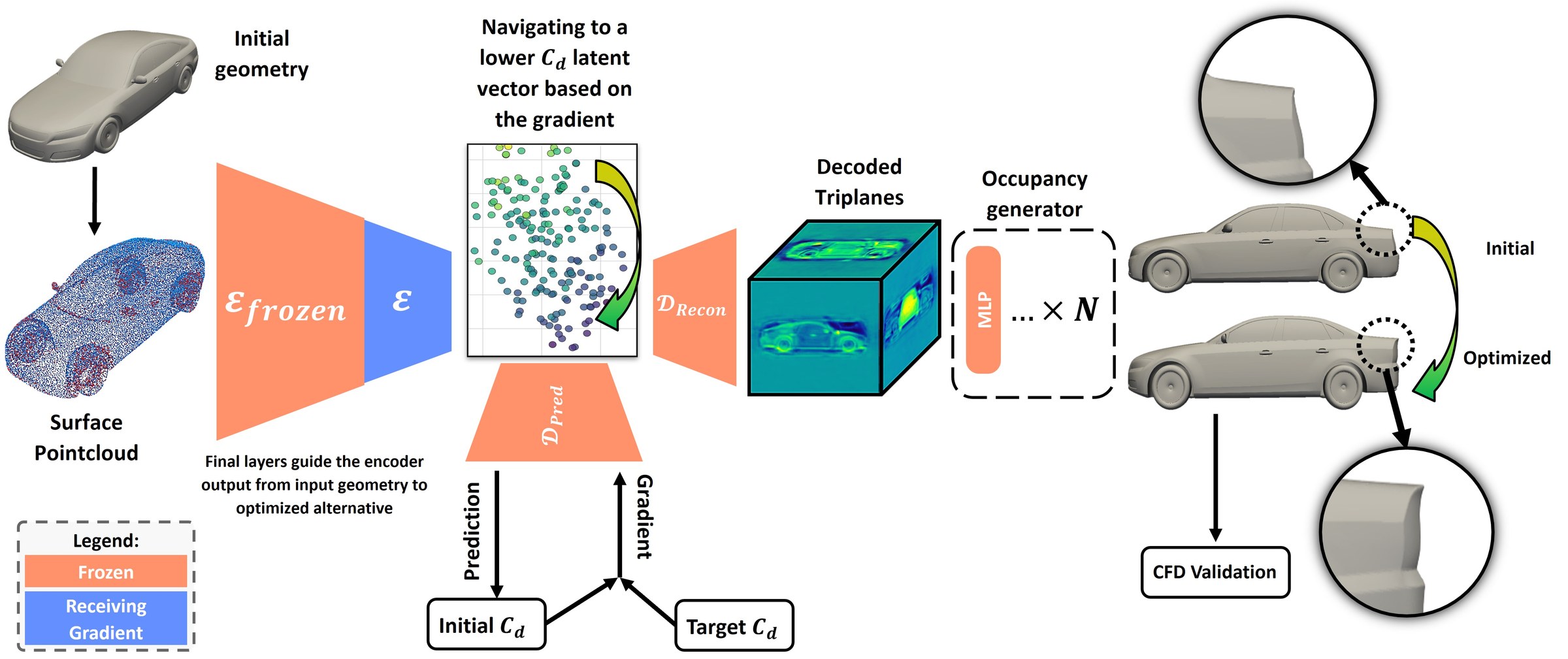
TripOptimizer is a fully differentiable deep-learning framework for rapid aerodynamic analysis and shape optimization. A triplane variational autoencoder compresses 3D car geometry into a structured latent space; a drag-prediction head evaluates aerodynamics directly from that latent. Because the whole pipeline is differentiable, drag gradients flow back into the latent space — turning shape optimization into gradient descent.
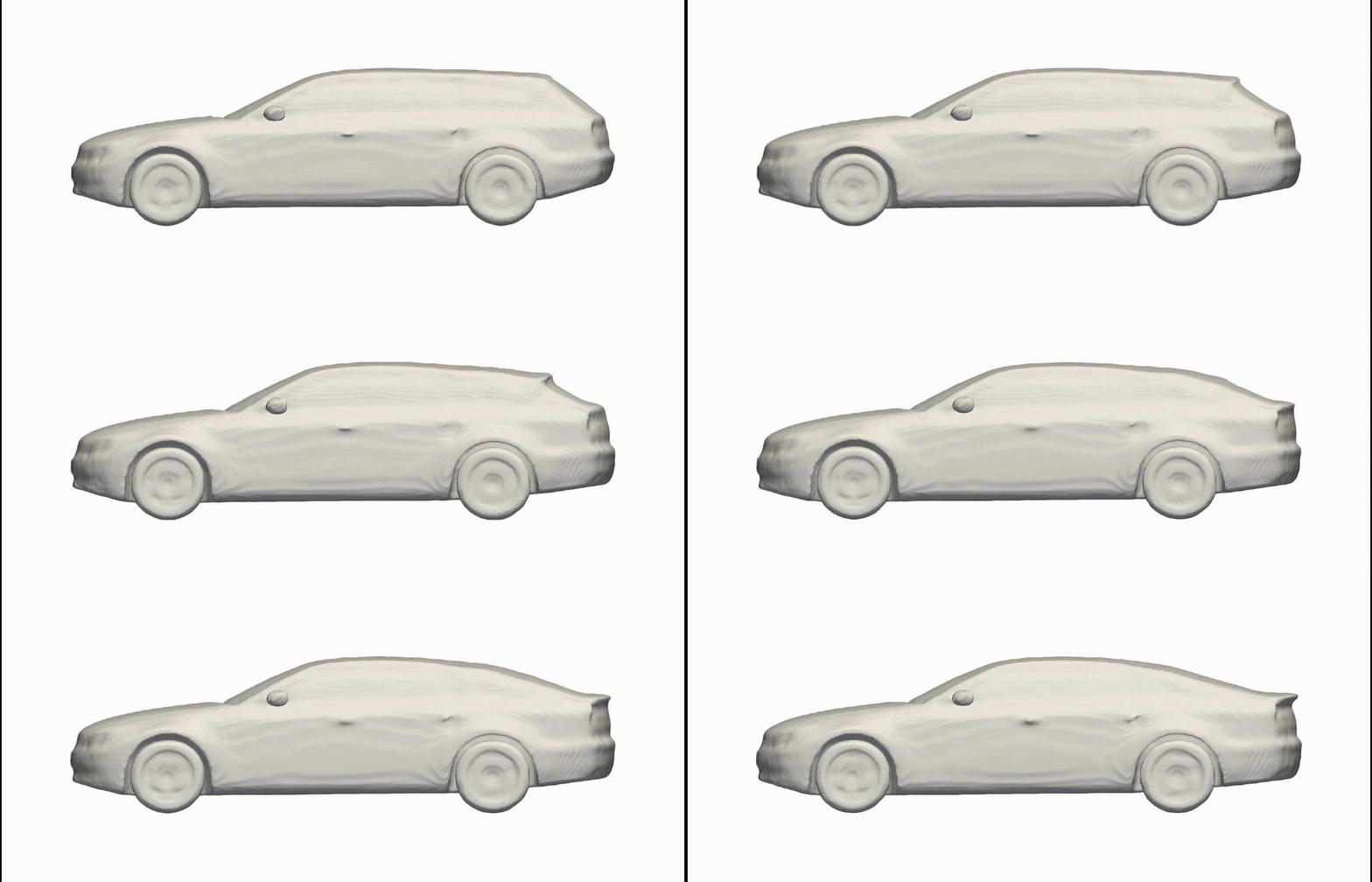
Does descending through a neural network actually produce better cars? In case studies on industry-standard geometries, the optimizer delivered drag-coefficient reductions of up to 11.8% — and the claim wasn't left to the surrogate to grade its own homework: the optimized shapes were re-simulated with independent high-fidelity CFD using more than 150 million cells. A quiet superpower of the implicit triplane representation: it shrugs off geometric imperfections, so even non-watertight meshes — the kind that break traditional adjoint-based optimization outright — can be optimized directly. That makes the framework practical in early design stages, where geometry is messy and CFD budgets are thin.
What the paper delivers
Triplane geometry encoding
Three axis-aligned feature planes represent full 3D car shapes compactly, capturing fine geometric detail without volumetric memory costs.
Drag prediction from latents
Aerodynamic performance is predicted directly in latent space — no meshing, no simulation in the loop.
Gradient-based 3D design
End-to-end differentiability enables generative optimization of industry-standard designs, producing lower-drag variants in minutes rather than CFD-weeks.
Accurate drag, controllable shape
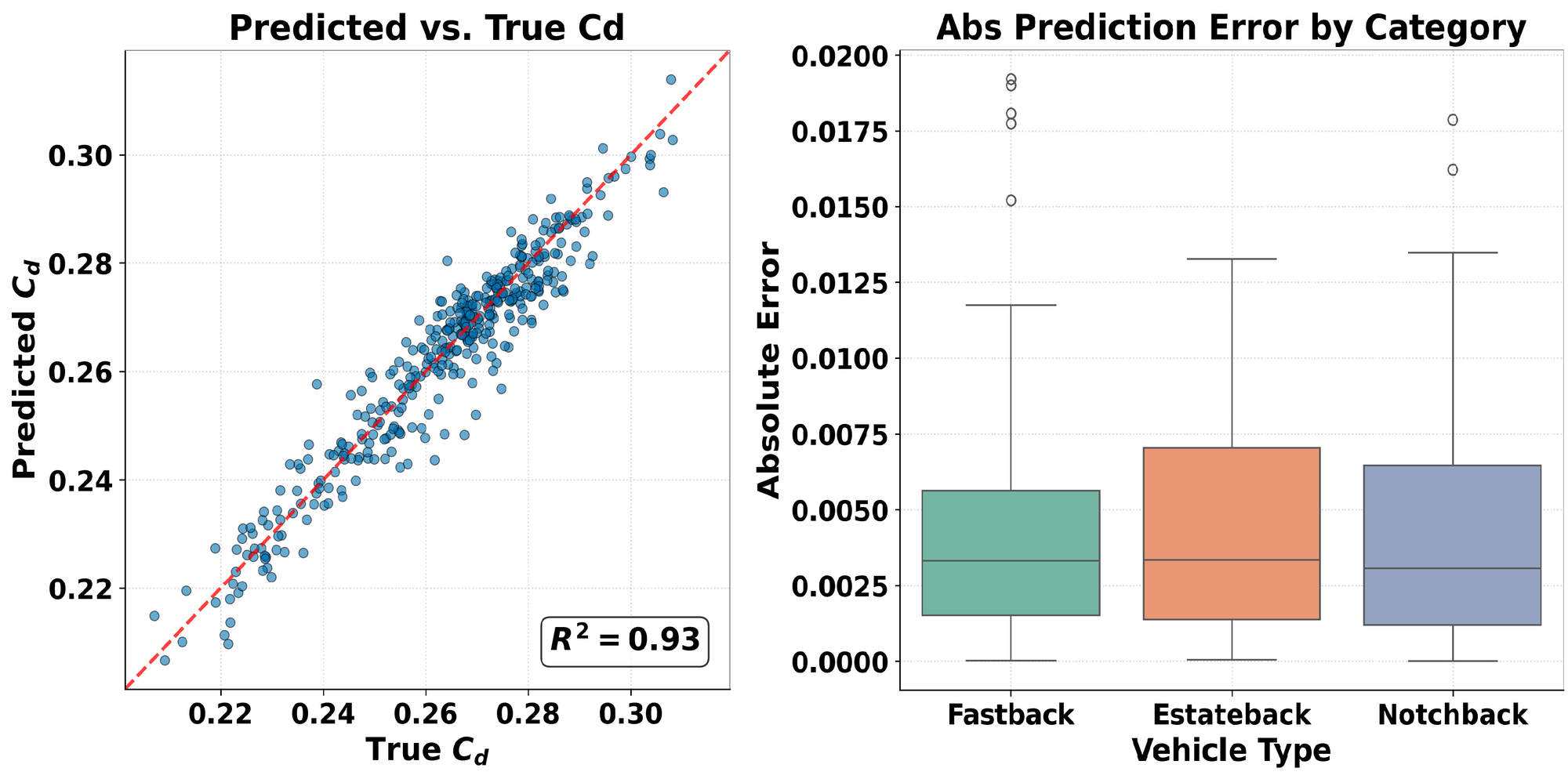
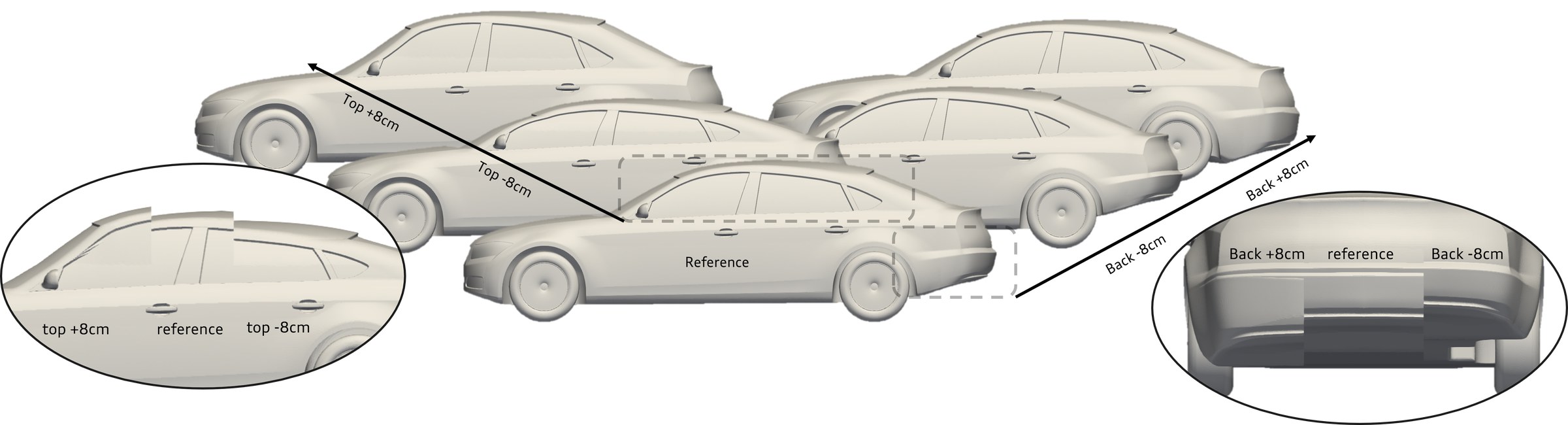
The latent-space drag head reaches R² = 0.93 on unseen industry-standard designs with consistent error across fastback, estateback, and notchback categories — and the latent space supports controlled, localized shape edits rather than arbitrary deformations.
Citation
@article{vatani2025tripoptimizer,
  title   = {TripOptimizer: Generative Three-Dimensional Shape Optimization
             and Drag Prediction using Triplane VAE Networks},
  author  = {Vatani, Parsa and Elrefaie, Mohamed and Nazarpour, Farhad
             and Ahmed, Faez},
  journal = {Physics of Fluids},
  volume  = {37},
  number  = {12},
  pages   = {127113},
  year    = {2025}
}