From dataset to benchmark, at aircraft scale
BlendedNet++ scales the original BlendedNet effort into a large-scale aerodynamics dataset and benchmark for blended wing body aircraft — broader geometric coverage, more high-fidelity simulations, and standardized evaluation protocols so neural surrogates for aircraft aerodynamics can finally be compared on equal footing.
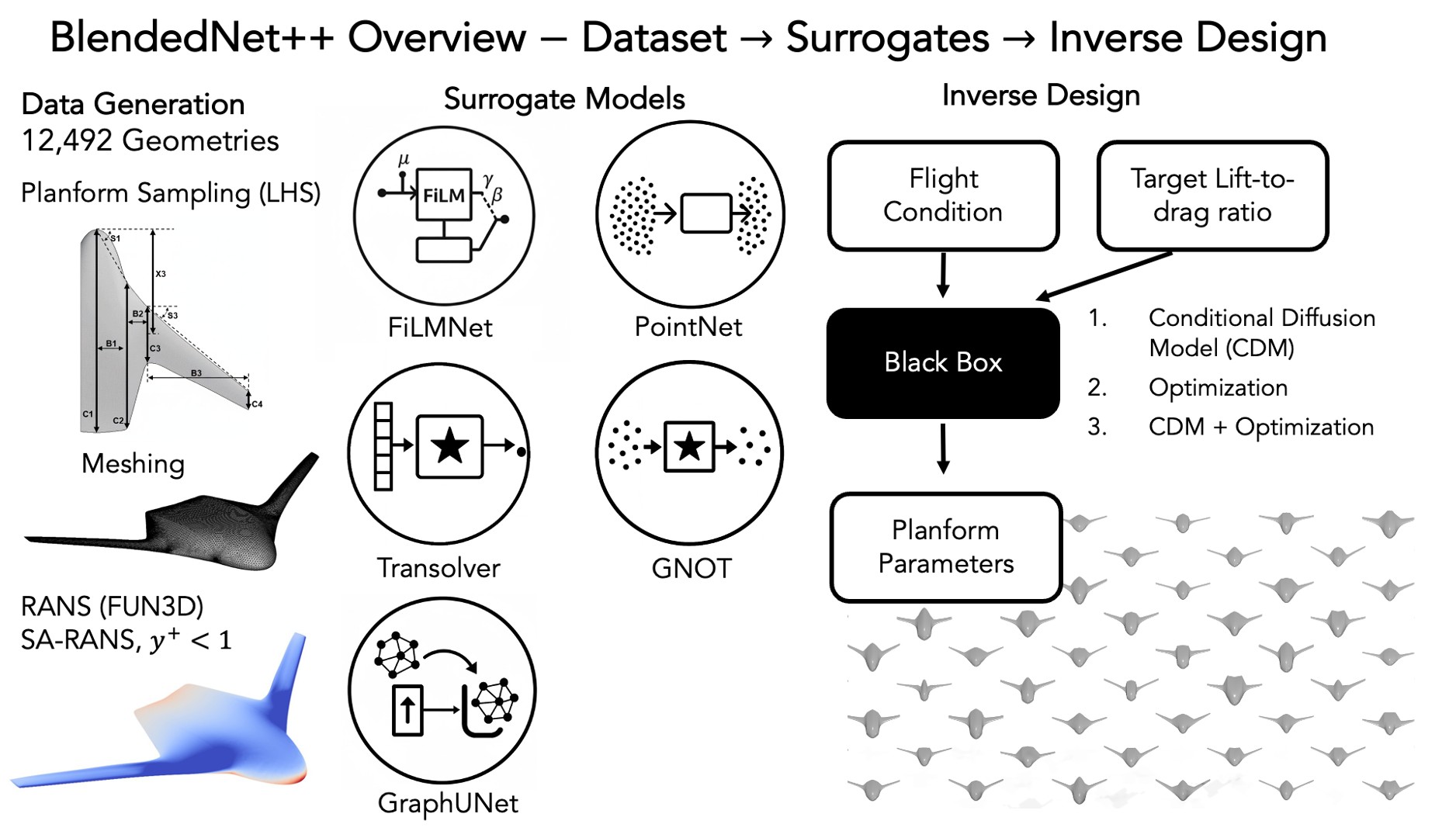
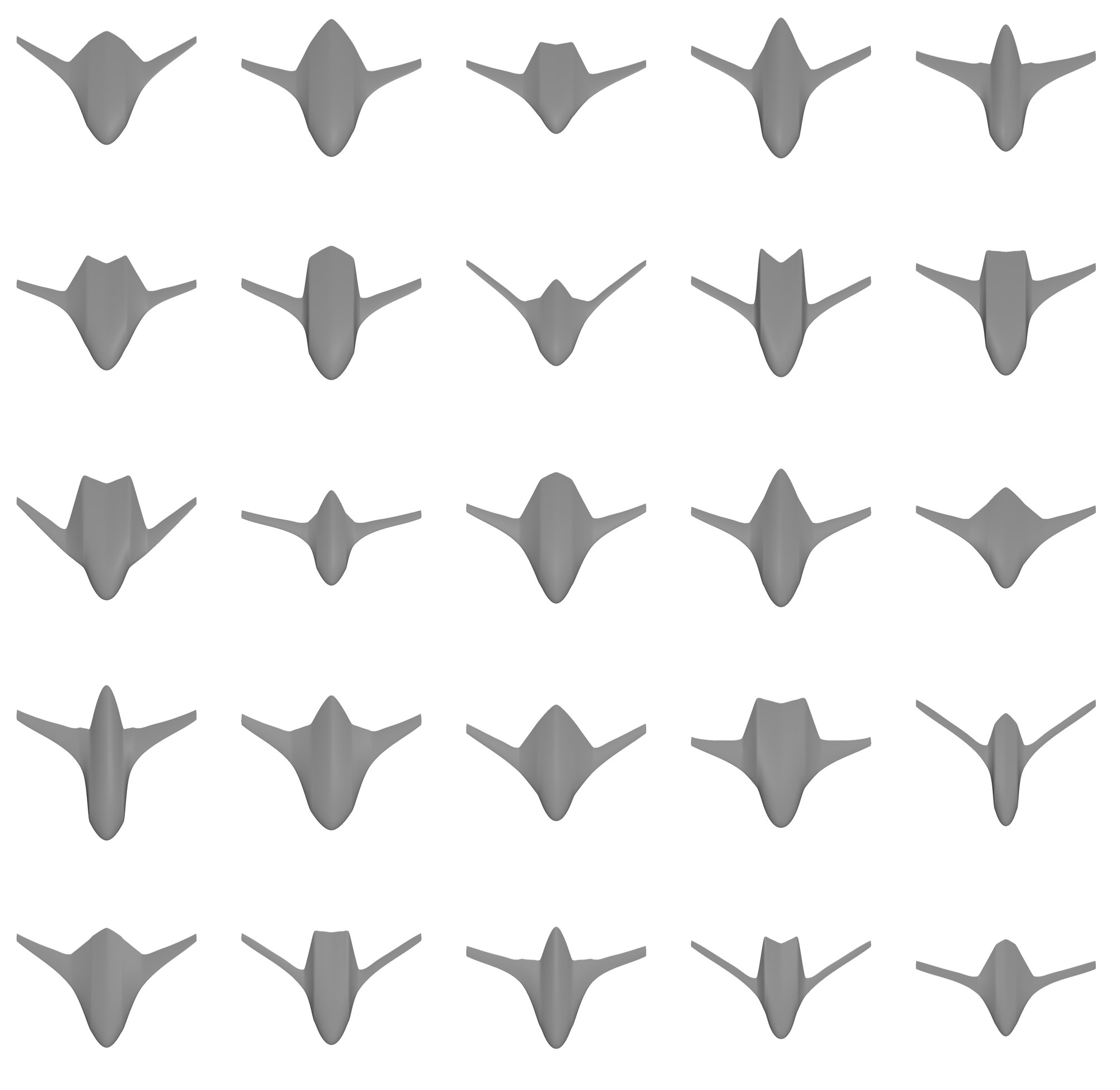
Conceptual BWB design has always been squeezed from two sides: the aerodynamics are complex enough to demand serious CFD, and the design space is high-dimensional enough that you can never afford as many runs as you'd like. BlendedNet++ attacks both ends. 12,492 unique geometries come with RANS-computed forces and dense surface fields, and on top of them the paper benchmarks five surrogate architectures — with Transolver emerging as the most accurate for field prediction. Then it goes a step further than prediction: a conditional-diffusion inverse-design pipeline with gradient-based refinement generates multiple feasible aircraft that hit specified lift-to-drag targets with R² above 0.99, confirmed by CFD — a shift from iteratively analyzing designs to directly generating them.
What the paper delivers
Large-scale BWB corpus
A substantially expanded set of blended-wing-body geometries and high-fidelity aerodynamic simulations.
Benchmark protocol
Defined splits, metrics, and baselines turn aircraft surrogate modeling into a reproducible, comparable research problem — mirroring what CarBench did for cars.
Foundation for aircraft SciML
Together with DrivAerNet++ and CarCrashNet, completes a family of open benchmarks spanning automotive aero, crash, and aircraft aerodynamics.
Full surface fields across the flight envelope
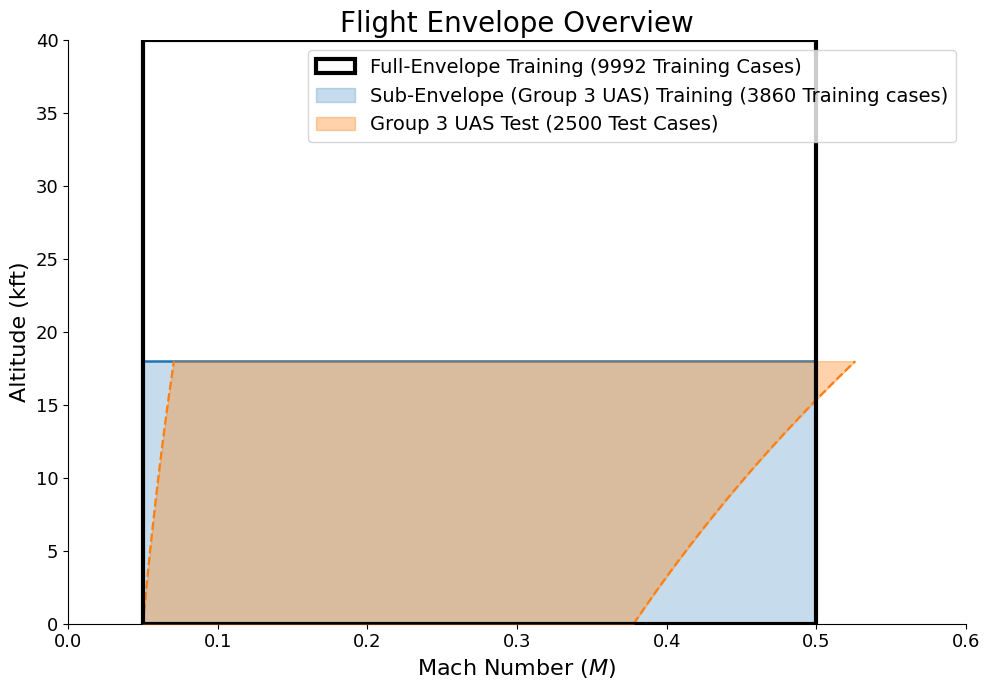
Each case pairs the geometry with surface pressure and skin-friction fields, sampled across a realistic flight envelope — including a held-out Group 3 UAS regime that tests whether surrogates generalize beyond their training conditions.

Citation
@article{sung2025blendednetpp,
  title   = {BlendedNet++: A Large-Scale Blended Wing Body Aerodynamics
             Dataset and Benchmark},
  author  = {Sung, Nicholas and Spreizer, Steven and Elrefaie, Mohamed and
             Jones, Matthew C. and Ahmed, Faez},
  journal = {arXiv preprint arXiv:2512.03280},
  year    = {2025}
}